
briggs and stratton 190cc engine manual
Briggs & Stratton 190cc Engine Manual: A Comprehensive Guide
Discover essential guidance for your Briggs & Stratton 190cc engine, encompassing operation, maintenance, and troubleshooting, sourced from official manuals and online resources.
The Briggs & Stratton 190cc engine represents a cornerstone of small engine technology, widely utilized in lawnmowers, pressure washers, and various outdoor power equipment. This robust engine is celebrated for its reliability, ease of maintenance, and consistent performance. Understanding its core functionalities is paramount for both novice users and experienced mechanics.
This comprehensive guide serves as an invaluable resource, providing detailed insights into the engine’s operation, maintenance schedules, and troubleshooting procedures. Whether you’re a homeowner tackling routine upkeep or a professional seeking detailed specifications, this manual aims to empower you with the knowledge needed to maximize the engine’s lifespan and efficiency. Resources like the Internet Archive offer downloadable manuals for series like the 825/850/875 and the 625 series, providing a wealth of information.
Proper utilization of this manual, alongside official Briggs & Stratton documentation, will ensure safe and effective engine operation, preventing potential issues and optimizing performance for years to come.
Engine Specifications & Model Series

The Briggs & Stratton 190cc engine commonly appears within model series 190000 and 280000, though specific configurations may vary. Key specifications include a displacement of 190 cubic centimeters, typically featuring a four-stroke OHV (Overhead Valve) design. These engines generally operate on unleaded gasoline with an octane rating of 87 or higher, requiring regular oil changes for optimal performance.
Power output generally ranges around 6.5 horsepower, making it suitable for a wide array of applications. The engine’s design prioritizes durability and ease of starting, often incorporating features like an automatic choke system. Accessing detailed specifications requires referencing the specific model number, as variations exist within these series.
Resources like the Manual Library and the Internet Archive host manuals detailing these specifications, including torque ratings and fuel consumption data. Understanding your engine’s specific model series is crucial for sourcing the correct parts and maintenance procedures.
Safety Precautions & Warnings
Prioritize safety when operating and maintaining your Briggs & Stratton 190cc engine. Always disconnect the spark plug wire before performing any maintenance to prevent accidental starting. Gasoline is highly flammable; store it in approved containers away from heat sources and open flames;
Never operate the engine in enclosed spaces due to the risk of carbon monoxide poisoning. Wear appropriate eye protection and gloves during maintenance procedures, especially when handling fuel or oil. Hot engine components can cause burns – allow the engine to cool completely before servicing.
Be mindful of moving parts while the engine is running. Ensure the surrounding area is clear of obstructions and bystanders. Consult the official manual for detailed safety guidelines and warnings specific to your model series. Ignoring these precautions can lead to serious injury.
Understanding Engine Components
Explore the inner workings of your 190cc engine, from the carburetor and governor systems to key parts, ensuring effective maintenance and optimal performance.
Key Parts Identification (190cc)
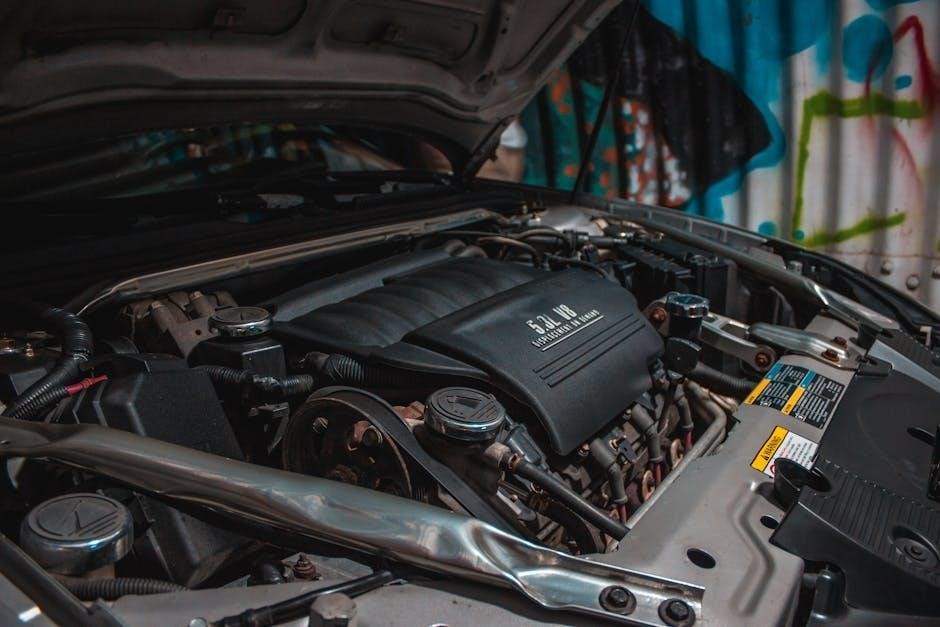
Identifying the core components of your Briggs & Stratton 190cc engine is crucial for successful maintenance and repair. The engine block forms the foundational structure, housing the piston and cylinder where combustion occurs. The cylinder head seals the top of the cylinder, containing valves that control the intake of air and fuel, and the exhaust of gases.
The carburetor mixes air and fuel for optimal combustion, while the governor regulates engine speed under varying loads. The crankshaft converts the piston’s linear motion into rotational power, driving the output shaft. Don’t overlook the muffler, which reduces exhaust noise, and the recoil starter, enabling manual engine starting.
Furthermore, the oil sump stores lubricating oil, and the air filter prevents debris from entering the engine. Familiarizing yourself with these parts, and their locations, will greatly simplify any maintenance or troubleshooting procedures you may undertake. Detailed parts diagrams, available through official Briggs & Stratton resources, are invaluable aids in this process.
Carburetor System Overview
The carburetor is a vital component of the Briggs & Stratton 190cc engine, responsible for precisely mixing air and fuel to create a combustible mixture. This system comprises several key parts, including the float bowl, which maintains a consistent fuel level, and the jet, which meters the fuel flow. The throttle valve controls the amount of air-fuel mixture entering the engine, regulating engine speed.
A choke valve enriches the mixture for cold starting by restricting airflow. Proper carburetor function is essential for smooth engine operation and efficient fuel consumption. Issues like a clogged jet or a faulty float can lead to starting problems or poor performance.
Regular inspection and cleaning, as outlined in the official Briggs & Stratton manuals, are crucial for maintaining optimal carburetor performance. Understanding its operation allows for effective diagnosis and repair of fuel-related issues, ensuring your engine runs reliably.
Governor System Explained
The governor system in the Briggs & Stratton 190cc engine automatically regulates engine speed, maintaining consistent performance under varying loads. It achieves this by balancing fuel supply and engine demand. The system typically utilizes centrifugal weights linked to the throttle valve. As engine speed increases, centrifugal force moves these weights outward, reducing the throttle opening and limiting fuel flow.
Conversely, when the load increases and engine speed drops, the weights move inward, opening the throttle and increasing fuel delivery. This feedback loop ensures stable operation. Proper governor function prevents engine over-speeding and provides consistent power output.
Refer to the official Briggs & Stratton manuals for detailed adjustments and troubleshooting. A malfunctioning governor can cause surging, unstable speed, or difficulty maintaining load, requiring inspection and potential repair or replacement of components.

Maintenance Procedures
Ensure optimal performance and longevity by following scheduled maintenance, including oil changes, air filter cleaning, spark plug checks, and fuel system upkeep for your engine.
Oil Change Guide (190cc Engine)
Regular oil changes are crucial for maintaining the 190cc engine’s health. Begin with a warm engine, but not hot, for easier oil flow. Disconnect the spark plug wire for safety. Locate the oil drain plug, typically at the bottom of the engine, and position a drain pan underneath.
Remove the plug, allowing the old oil to drain completely – this may take 15-20 minutes. Once drained, reinstall the plug, ensuring it’s snug but not overtightened. Next, remove the oil fill cap and add the correct amount of oil, typically around 15-20 ounces, checking the dipstick frequently to avoid overfilling.
Use oil with the appropriate viscosity grade as specified in your engine’s manual (often SAE 30). Finally, reconnect the spark plug wire and start the engine, verifying there are no leaks around the drain plug. Properly dispose of the used oil at a designated recycling center.
Air Filter Cleaning & Replacement
Maintaining a clean air filter is vital for optimal engine performance. Locate the air filter housing, usually a plastic cover on the engine. Remove the cover to access the filter element. If the filter is paper, gently tap it to remove loose debris; avoid using compressed air, as it can damage the paper. For foam filters, wash them in warm, soapy water, rinse thoroughly, and allow to dry completely.
Inspect the filter for tears or damage. If damaged, or if the paper filter is excessively dirty, replace it with a new one. Ensure the new filter is properly seated within the housing. Reattach the air filter cover, securing it firmly.
Regularly checking and cleaning/replacing the air filter prevents dirt and debris from entering the engine, extending its lifespan and ensuring efficient operation. Consult your manual for specific filter part numbers.

Spark Plug Inspection & Replacement
Regular spark plug inspection is crucial for reliable engine starting and performance. Disconnect the spark plug wire, then use a spark plug wrench to carefully remove the plug. Inspect the electrode for wear, carbon buildup, or damage. A healthy plug should have a tan or gray color. Excessive blackness indicates a rich fuel mixture, while whiteness suggests a lean mixture.
To check for spark, reconnect the plug wire, ground the plug’s metal body against the engine block, and pull the starter cord. A strong, blue spark indicates a good plug. If the spark is weak or absent, or if the plug is fouled or damaged, replace it with a new spark plug of the correct type.
Gap the new plug according to the engine’s specifications (refer to your manual) before installation. Tighten the plug securely, but avoid over-tightening.
Fuel System Maintenance
Maintaining a clean fuel system is vital for optimal engine operation. Begin by using fresh fuel and a fuel stabilizer, especially during storage, to prevent gum and varnish buildup. Periodically inspect the fuel lines for cracks or leaks, replacing them as needed. The fuel filter, if equipped, should be replaced annually or more frequently if used in dusty conditions.
The carburetor requires occasional cleaning. If the engine runs poorly, or if fuel is not flowing correctly, carefully disassemble the carburetor, cleaning all jets and passages with carburetor cleaner. Ensure all components are reassembled correctly.
Always handle fuel with care, working in a well-ventilated area and avoiding open flames. Properly dispose of old fuel and fuel filter elements.

Troubleshooting Common Issues
Diagnose frequent problems like starting failures, power loss, and overheating with this guide, ensuring your Briggs & Stratton 190cc engine runs smoothly and reliably.
Engine Starting Problems
Experiencing difficulty getting your Briggs & Stratton 190cc engine to start? Several factors could be at play. First, verify the fuel system; ensure fresh fuel is present and the fuel shut-off valve (if equipped) is open. A clogged carburetor is a common culprit, requiring cleaning or rebuilding.
Next, inspect the spark plug. A fouled or damaged spark plug won’t ignite the air-fuel mixture. Clean or replace it as needed, ensuring the correct gap. Check the ignition coil for proper functionality – a weak spark indicates a potential issue.
Low compression can also hinder starting. Examine the piston rings and cylinder for wear. Finally, confirm the choke is functioning correctly, providing a richer mixture for cold starts. Remember to prime the engine by pulling the starter rope several times before attempting to start.
Loss of Power Diagnosis
If your Briggs & Stratton 190cc engine runs but exhibits a noticeable loss of power, systematic diagnosis is crucial. Begin by assessing the air filter; a clogged filter restricts airflow, diminishing performance. Clean or replace it promptly. Next, investigate the carburetor. Deposits can restrict fuel flow, leading to a lean mixture and power reduction. Cleaning or rebuilding may be necessary.
Check the spark plug for fouling or damage, as a weak spark compromises combustion. Examine the fuel lines for kinks or obstructions, ensuring adequate fuel delivery. Consider valve issues – worn or improperly adjusted valves reduce compression and power.
Finally, assess the engine’s overall condition; Worn piston rings or cylinder walls contribute to compression loss. Remember to use a tachometer to verify the engine is reaching its rated RPM.
Overheating Causes & Solutions
Engine overheating in a Briggs & Stratton 190cc engine demands immediate attention to prevent severe damage. A primary cause is insufficient cooling, often due to a blocked cooling fan or shroud. Ensure these components are clean and functioning correctly. Low oil levels drastically reduce lubrication, increasing friction and heat; verify and replenish oil as needed.
Consider the carburetor; a lean fuel mixture causes excessively high combustion temperatures. Inspect and adjust the carburetor accordingly. Check for carbon buildup within the combustion chamber, which retains heat. Address this with a decarbonizing treatment.
Prolonged operation under heavy load can also induce overheating. Allow the engine to cool down periodically. Finally, confirm the cylinder head bolts are properly torqued to maintain adequate compression and cooling efficiency.
Manuals & Resources
Access official Briggs & Stratton manuals, parts diagrams, and online support for your 190cc engine, readily available through the Internet Archive and library resources.
Locating Official Briggs & Stratton Manuals
Finding the correct manual for your Briggs & Stratton 190cc engine is crucial for proper maintenance and repair. The Internet Archive serves as a valuable repository, offering downloadable PDF versions of various Briggs & Stratton manuals, including those for related series like the 625 and 825/850/875.
Specifically, resources like the Internet Archive allow you to “borrow” or download manuals directly, often in multiple formats like PDF, JP2 ZIP, and even TORRENT. Chris85 has uploaded several manuals to this platform, providing a community-driven resource.
Furthermore, The Manual Library, accessible through the Internet Archive, consolidates Briggs & Stratton documentation. When searching, referencing the model series (e.g., 190000, 280000) as indicated in operating and maintenance instructions will refine your results. Always verify the manual corresponds to your specific engine configuration for accurate information regarding carburetor and motor oil specifications.
Online Resources & Support
Beyond downloadable manuals, a wealth of online resources supports Briggs & Stratton 190cc engine owners. The Internet Archive, hosting manuals uploaded by users like chris85, fosters a collaborative support network. These archives provide access to operating and maintenance instructions, often detailing carburetor specifics and recommended motor oil types.
However, direct support from Briggs & Stratton may be limited for older models. Utilizing online forums and communities dedicated to small engine repair can prove invaluable. These platforms allow users to share experiences, troubleshoot issues, and locate parts diagrams.
Remember to clearly identify your engine’s model series (190000, 280000) when seeking assistance. Exploring resources related to similar Briggs & Stratton series (625, 825/850/875) can also yield helpful insights, as components and maintenance procedures often overlap. A proactive approach to online research empowers effective engine care.
Briggs & Stratton Parts Diagrams (190cc)
Accessing detailed parts diagrams is crucial for successful 190cc engine maintenance and repair. While official Briggs & Stratton diagrams aren’t directly linked in the provided sources, the Internet Archive’s user-uploaded manuals often contain exploded views of key components.
These diagrams visually represent the engine’s assembly, identifying each part with a corresponding number. This facilitates accurate parts ordering and simplifies complex repair procedures. Searching online using your specific model series (190000 or 280000) alongside “parts diagram” yields results from various small engine parts retailers.
Furthermore, exploring diagrams for similar Briggs & Stratton series (625, 825/850/875) can provide supplementary visual references. Understanding the relationship between parts is paramount; diagrams are invaluable tools for both novice and experienced mechanics, ensuring correct assembly and optimal engine performance.