
1-2-2 press break pdf
The 1-2-2 press break‚ a fundamental technique in sheet metal forming‚ facilitates efficient bending sequences. It’s widely documented in various PDF guides and resources‚ offering a streamlined approach to creating specific angles and geometries. Understanding its core principles is crucial for metal fabrication professionals.
What is a Press Break?
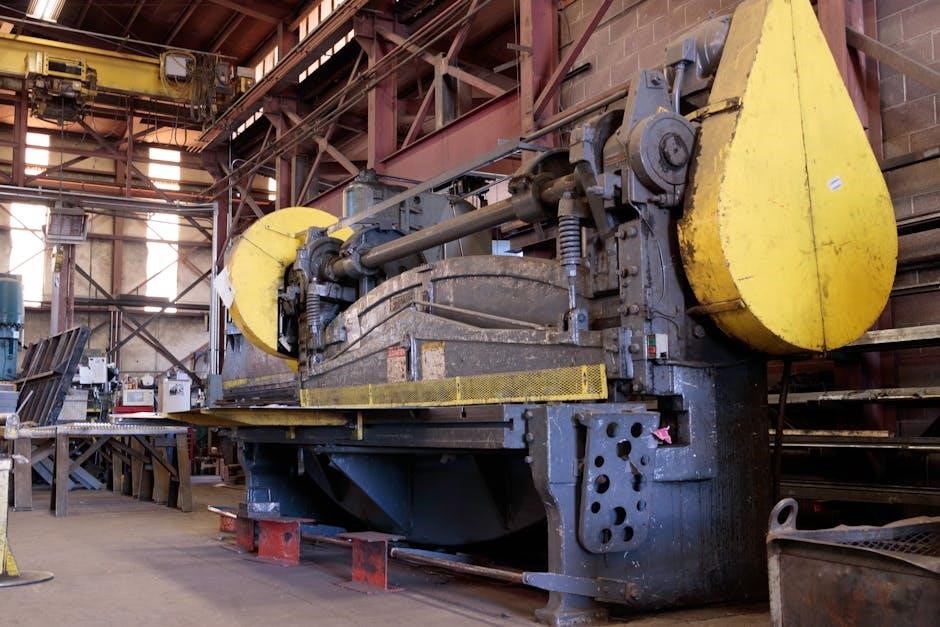
A press brake‚ fundamentally‚ is a machine tool used for bending sheet metal. It employs a punch and die to deform the metal‚ creating angles and shapes. Numerous PDF resources detail the mechanics‚ emphasizing controlled force application. Unlike other forming methods‚ press brakes excel at producing precise‚ repeatable bends across various materials and thicknesses.
The process involves clamping the sheet metal between the punch and die‚ then applying downward force. This force causes the metal to plastically deform‚ conforming to the shape of the tooling. Understanding the interplay between punch radius‚ die opening‚ and material properties – often detailed in comprehensive PDF manuals – is vital for achieving desired results.
Press brakes are categorized by tonnage‚ indicating the maximum force they can exert. Selecting the appropriate tonnage is crucial for successful bending without damaging the machine or the material; Modern PDF guides often include tonnage charts based on material type and thickness‚ simplifying this selection process. They are essential for manufacturing a wide array of products.
The Significance of the 1-2-2 Sequence
The “1-2-2” sequence in press brake operations refers to a specific bending order – a first bend of a certain degree‚ followed by two subsequent bends of another degree. Many PDF tutorials highlight this sequence’s efficiency for creating specific geometries‚ particularly flanges and returns. It minimizes material distortion and simplifies complex forming processes.
This sequence is particularly valuable when fabricating boxes‚ brackets‚ and enclosures. Detailed PDF guides often illustrate how the 1-2-2 method reduces the need for multiple setups and tool changes‚ increasing productivity. It’s a cornerstone technique for achieving accurate and consistent bends‚ especially in high-volume production runs.
The strategic order of bends in the 1-2-2 sequence helps manage springback – the tendency of metal to return slightly towards its original shape after bending. Advanced PDF resources explain how to compensate for springback by adjusting bend allowances within the sequence. Mastering this sequence is key to precision metal forming.
Applications in Metal Fabrication
The 1-2-2 press break sequence finds extensive application across diverse metal fabrication industries. Numerous PDF guides demonstrate its utility in creating enclosures for electronics‚ automotive components‚ and architectural elements. It’s a go-to method for producing brackets‚ housings‚ and panels requiring precise angularity.
Specifically‚ the 1-2-2 method excels in box and pan fabrication‚ as detailed in many instructional PDFs. It allows for efficient creation of return flanges and corner bends‚ minimizing material waste and setup time. Industries like HVAC and appliance manufacturing heavily rely on this technique for consistent product quality.
Furthermore‚ the 1-2-2 sequence is frequently employed in the production of structural components‚ as illustrated in specialized PDF documentation. Its ability to create strong‚ accurate bends makes it ideal for applications demanding high structural integrity. From simple brackets to complex assemblies‚ the 1-2-2 press break remains a versatile and essential process.

Understanding the Mechanics of the 1-2-2 Press Break
PDF resources detail how the 1-2-2 sequence leverages controlled deformation of sheet metal. Accurate bend allowance calculations‚ material properties‚ and tooling selection are vital for success.
Bend Allowance Calculations
Bend allowance is a critical component in 1-2-2 press break operations‚ thoroughly explained in numerous PDF guides. It represents the length of material consumed during the bending process‚ accounting for material stretching and compression. Accurate calculation prevents over or under-bending‚ ensuring dimensional accuracy.
The formula typically involves the bend deduction (K-factor)‚ material thickness‚ and bend angle. The K-factor‚ varying by material and bend radius‚ dictates the amount of stretch. PDF documentation often provides K-factor tables for common materials like steel‚ aluminum‚ and stainless steel.
For a 1-2-2 bend‚ calculating the allowance for each bend is essential. The total flat length is then determined by summing the flat lengths of all straight sections plus the bend allowances. Ignoring this step leads to significant errors. Advanced PDF resources may include software tools or spreadsheets to automate these calculations‚ simplifying the process and minimizing human error.
Material Properties and Their Impact
Material properties significantly influence the success of a 1-2-2 press break‚ a point consistently emphasized in detailed PDF guides. Factors like tensile strength‚ yield strength‚ and ductility dictate how a material responds to bending forces. Harder materials require greater force and may exhibit more springback.
Different materials necessitate adjustments to tooling and bending parameters. For instance‚ aluminum‚ being more ductile‚ generally requires a smaller bend radius than steel. Stainless steel‚ known for its work hardening‚ demands careful consideration of tooling wear and potential cracking. PDF resources often provide material-specific recommendations.
Understanding the material’s grain direction is also crucial‚ as bending against the grain can lead to fracturing. Comprehensive PDF documentation will detail these nuances‚ offering guidance on selecting appropriate materials and optimizing bending processes for specific applications. Ignoring these properties results in flawed parts and wasted material.
Tooling Considerations for 1-2-2 Bends
Selecting the correct tooling is paramount for accurate 1-2-2 press breaks‚ a detail thoroughly covered in most PDF guides. Punch and die selection directly impacts bend accuracy‚ material deformation‚ and tooling longevity. The PDF resources emphasize the importance of matching tooling to both material type and thickness.
V-dies are commonly used for 1-2-2 bends‚ offering versatility in creating various angles. However‚ U-dies may be preferable for tighter radii or specific material characteristics. Proper punch offset calculation‚ detailed in PDF documentation‚ minimizes distortion and ensures consistent results.
Tooling wear is a significant concern‚ particularly with harder materials like stainless steel. Regular inspection and maintenance‚ as outlined in comprehensive PDF manuals‚ are essential. Utilizing high-quality tooling and appropriate lubrication extends tool life and maintains bend precision. Incorrect tooling leads to inaccuracies and potential damage.

Step-by-Step Guide to Performing a 1-2-2 Press Break
PDF guides detail a precise sequence: material preparation‚ press setup‚ and executing three distinct bends. Accuracy relies on careful alignment and adherence to specified parameters.
Preparing the Material
Initial material assessment is paramount‚ as detailed in many 1-2-2 press break PDF tutorials. Begin by verifying the sheet metal’s gauge and type – steel‚ aluminum‚ or stainless steel – as these dictate tooling and pressure requirements. Thoroughly inspect the material for any pre-existing imperfections like scratches‚ dents‚ or inconsistencies in thickness. These flaws can significantly impact bend accuracy and structural integrity.
Prior to bending‚ accurately measure and mark the material according to the blueprint or digital design. Precise markings are crucial for aligning the sheet metal correctly within the press brake. Deburring the edges is also essential; sharp edges can damage the tooling and create inconsistent bends. Use a deburring tool or file to smooth all edges along the intended bend lines.
Finally‚ ensure the material is clean and free from any oils‚ lubricants‚ or contaminants. These substances can affect the material’s friction coefficient and lead to inaccurate bends. Wipe down the sheet metal with a clean cloth and appropriate solvent if necessary. Proper preparation minimizes errors and maximizes the quality of the final product.

Setting Up the Press Brake
Press brake setup‚ as comprehensively outlined in 1-2-2 press break PDF guides‚ demands meticulous attention to detail. Begin by selecting the appropriate tooling – punch and die – based on the material type‚ thickness‚ and desired bend radius. Ensure the tooling is clean‚ undamaged‚ and securely mounted within the press brake. Accurate tooling selection is fundamental to achieving precise bends.
Next‚ adjust the press brake’s back gauge to the specified dimensions outlined in the blueprint. The back gauge provides critical support and positioning during the bending process. Precisely align the tooling with the marked bend lines on the sheet metal. Verify the tooling alignment using a square or ruler to guarantee accuracy.
Finally‚ configure the press brake’s parameters‚ including bend angle‚ pressure‚ and speed. Refer to the PDF documentation for recommended settings based on the material and tooling. Perform a test bend on a scrap piece of material to validate the setup and make any necessary adjustments before proceeding with the actual workpiece.
Executing the First Bend (1)
The initial bend in a 1-2-2 press break sequence‚ detailed in numerous PDF resources‚ establishes the foundation for subsequent operations. Carefully position the sheet metal against the back gauge‚ ensuring precise alignment with the designated bend line. Lower the upper tool (punch) slowly and deliberately‚ applying consistent pressure throughout the bending process.
Monitor the bending process closely‚ observing the material’s deformation. Avoid excessive force‚ which can lead to distortion or tooling damage. Refer to the PDF guides for recommended tonnage settings based on material type and thickness. Once the desired bend angle is achieved‚ release the pressure and retract the punch.
Inspect the completed first bend for accuracy‚ verifying the angle and straightness. Minor adjustments to the press brake’s settings may be necessary to refine the bend. This initial bend dictates the subsequent steps‚ so precision is paramount for a successful outcome‚ as highlighted in the PDF instructions.

Executing the Second Bend (2)
The second bend in the 1-2-2 press break sequence‚ thoroughly explained in available PDF documentation‚ builds upon the foundation established by the first bend. Rotate the sheet metal to expose the next bend location‚ again ensuring precise alignment with the designated line. Utilize the back gauge to maintain consistent positioning throughout this stage.

Lower the upper tool with controlled pressure‚ mirroring the technique used in the first bend. Pay close attention to the material’s response‚ avoiding over-bending or distortion. PDF guides often provide specific angle recommendations for this step‚ dependent on the desired final geometry.
After completing the second bend‚ carefully inspect its accuracy. Verify the angle and alignment with the first bend. Minor adjustments to the press brake’s settings may be required to achieve the desired result. This bend‚ as detailed in the PDF resources‚ is critical for defining the overall shape.
Executing the Third Bend (2)
The final bend‚ the second instance of ‘2’ in the 1-2-2 press break sequence‚ completes the initial forming process‚ as detailed in comprehensive PDF guides. Rotate the workpiece once more‚ aligning it for the last bend. Precise positioning against the back gauge is paramount to ensure symmetry and accuracy.
Lower the upper tool‚ applying pressure similar to the previous bends. Refer to the PDF documentation for recommended tonnage and bend radius settings specific to the material and tooling being used. Monitor the material closely‚ preventing any unwanted deformation or springback. This final bend locks in the overall shape.
Upon completion‚ thoroughly inspect all three bends. Verify the angles‚ alignment‚ and overall dimensions against the design specifications. PDF resources often include checklists for quality control. Minor adjustments may be needed to refine the part‚ achieving the desired final product.

Common Issues and Troubleshooting
PDF guides highlight springback‚ distortion‚ and tooling damage as frequent challenges. Careful material selection‚ proper bend allowance calculations‚ and regular maintenance mitigate these issues effectively.
Springback and How to Compensate
Springback‚ a common issue detailed in 1-2-2 press break PDF resources‚ refers to the elastic recovery of the material after bending. The bent metal tends to return partially to its original shape‚ resulting in a smaller bend angle than intended. This phenomenon is particularly pronounced in materials with high yield strength‚ like stainless steel.
Several methods exist to compensate for springback. PDF guides often recommend overbending – intentionally exceeding the desired angle during the initial bend to account for the elastic recovery. The amount of overbend required depends on the material type‚ thickness‚ and bend radius.
Another technique involves applying a bending deduction‚ subtracting a calculated value from the desired angle. Accurate bend allowance calculations‚ as outlined in many PDF tutorials‚ are crucial for determining the appropriate deduction. Tooling selection also plays a role; using tools with a smaller bend radius can minimize springback. Finally‚ bottom bending‚ where the material is bent against a die‚ generally exhibits less springback than air bending.
Distortion and Warping Prevention
Distortion and warping are frequent challenges addressed in comprehensive 1-2-2 press break PDF guides. These issues arise from uneven material flow during bending‚ leading to dimensional inaccuracies and undesirable shapes. Proper planning and technique are vital for prevention.
PDF resources emphasize the importance of balanced bending sequences. When performing a 1-2-2 bend‚ strategically positioning the bends minimizes internal stresses. Utilizing appropriate tooling – ensuring correct punch and die widths – also contributes to uniform material deformation.
Material handling plays a crucial role. Supporting the workpiece adequately during bending prevents sagging and warping. Furthermore‚ controlling bending speed and applying consistent pressure are essential. Many PDF documents recommend stress relieving heat treatment for materials prone to distortion. Careful consideration of grain direction and avoiding sharp corners in the part design can also significantly reduce the risk of warping‚ ensuring accurate and repeatable results.

Tooling Damage and Maintenance
Tooling damage is a significant concern detailed in many 1-2-2 press break PDF manuals. Improper setup‚ excessive force‚ or using incorrect tooling for the material can lead to chipped punches‚ worn dies‚ and ultimately‚ costly replacements. Regular inspection is paramount.
PDF guides consistently stress preventative maintenance. This includes daily cleaning to remove metal chips and debris‚ and periodic lubrication of moving parts. Inspecting punches and dies for wear – looking for rounding of edges or cracks – is crucial.
Proper storage is also vital. Protecting tooling from rust and corrosion extends its lifespan. Many PDF resources recommend applying a protective coating after cleaning. Furthermore‚ understanding the tooling’s material limitations and avoiding exceeding its capacity prevents premature failure. Consistent adherence to manufacturer recommendations‚ often found within these PDF documents‚ ensures optimal tooling performance and minimizes downtime.

Advanced Techniques and Considerations
PDF resources detail complex 1-2-2 bending for varied materials. CNC integration‚ automation‚ and geometry considerations elevate precision and efficiency in sheet metal fabrication.
Using Different Materials (Steel‚ Aluminum‚ Stainless Steel)
PDF guides on the 1-2-2 press break consistently emphasize material-specific adjustments. Steel‚ being more ductile‚ generally requires less compensation for springback compared to aluminum. Aluminum‚ conversely‚ exhibits greater elasticity‚ demanding increased bend allowances and potentially multiple‚ smaller bends to achieve the desired angle accurately.
Stainless steel presents unique challenges due to its work hardening characteristics. It requires significantly more force and careful tooling selection to prevent cracking or distortion during the 1-2-2 sequence. PDF documentation often includes charts detailing recommended tonnages and die configurations for various stainless steel grades.
Furthermore‚ material thickness plays a critical role. Thicker materials necessitate greater force and wider die openings. Understanding the material’s tensile strength and yield strength‚ as outlined in many PDF resources‚ is paramount for successful 1-2-2 bending. Proper lubrication is also essential‚ particularly with stainless steel‚ to reduce friction and prevent galling.
Complex Geometry and 1-2-2 Press Breaks
PDF guides detailing advanced press brake techniques frequently address complex geometries. While the 1-2-2 sequence excels in creating common bends‚ adapting it for intricate shapes requires careful planning and often‚ a combination of different bending methods. Features like return flanges‚ hems‚ and complex contours may necessitate intermediate bends or the use of specialized tooling.
Many PDF resources advocate for utilizing software simulations to predict material behavior and optimize the bending sequence. These simulations account for factors like springback‚ material properties‚ and tooling geometry‚ minimizing trial-and-error. De-forming the part into manageable bending stages is a common strategy.
Furthermore‚ understanding the limitations of the 1-2-2 method is crucial. Extremely tight radii or sharp corners may be unattainable without employing alternative techniques like coining or air bending. Detailed PDF tutorials often showcase how to integrate the 1-2-2 sequence with these advanced methods for optimal results‚ ensuring accuracy and minimizing material waste.
Automation and CNC Press Brake Integration
Modern PDF documentation for press brake operation increasingly focuses on automation and CNC integration; Utilizing CNC press brakes significantly enhances the precision and repeatability of 1-2-2 bending sequences. Programming the machine with the correct bend order‚ angles‚ and tooling offsets eliminates manual errors and reduces cycle times.
Many PDF guides detail how to import CAD designs directly into the CNC controller‚ automatically generating the necessary bending programs. This streamlines the workflow and minimizes the need for manual programming. Automated backgauges and crowning systems further improve accuracy and consistency.
Advanced CNC features allow for dynamic crowning‚ compensating for material variations and tooling deflection. PDF resources often highlight the benefits of using robotic automation for material handling‚ loading‚ and unloading‚ creating a fully automated bending cell. This integration boosts productivity and reduces operator fatigue‚ ultimately improving overall efficiency and part quality.
Safety Precautions for Press Brake Operation
PDF guides emphasize rigorous safety protocols. Always utilize proper PPE‚ understand emergency stops‚ and implement lockout/tagout procedures. Prioritize safe operation during 1-2-2 bending.
Personal Protective Equipment (PPE)
Crucially‚ any PDF documentation regarding press brake operation‚ including procedures for the 1-2-2 bend‚ will emphatically stress the absolute necessity of appropriate Personal Protective Equipment (PPE). This isn’t merely a suggestion; it’s a fundamental safety requirement designed to mitigate the inherent risks associated with powerful machinery and potentially hazardous materials.
At a minimum‚ operators must wear safety glasses with side shields to protect against flying debris generated during the bending process. Steel-toe boots are essential to safeguard feet from dropped materials or accidental impacts. Hearing protection‚ such as earplugs or earmuffs‚ is recommended due to the often-significant noise levels produced by the press brake.
Furthermore‚ close-fitting‚ durable work gloves are vital for providing a secure grip and protecting hands from sharp edges and potential pinch points. Depending on the material being bent‚ additional PPE‚ like appropriate arm sleeves or a full-body suit‚ may be necessary. Regular inspection of all PPE is paramount to ensure its continued effectiveness and integrity. Ignoring PPE requirements significantly increases the risk of serious injury.
Emergency Stop Procedures
Any comprehensive PDF guide detailing 1-2-2 press break operation will dedicate significant space to outlining clear and concise emergency stop procedures. These procedures are critical for rapidly halting the machine in unforeseen circumstances‚ preventing potential injuries or damage. Familiarity with these steps is non-negotiable for all operators.
Typically‚ press brakes are equipped with multiple‚ readily accessible emergency stop (E-Stop) buttons‚ usually prominently colored in red. These buttons‚ when pressed‚ immediately cut power to the machine’s critical components‚ bringing it to a complete and controlled stop. Operators must know the location of all E-Stop buttons on their specific machine.
Beyond simply pressing the E-Stop‚ procedures often include immediately notifying a supervisor and initiating a thorough investigation to determine the cause of the emergency. Do not attempt to restart the machine until it has been inspected and cleared by qualified personnel. Regular drills practicing E-Stop procedures are highly recommended to ensure swift and effective response in a real-world emergency situation.
Lockout/Tagout Procedures
Detailed PDF manuals for 1-2-2 press brake operation universally emphasize the importance of robust Lockout/Tagout (LOTO) procedures. These procedures are designed to prevent accidental machine startup during maintenance‚ repair‚ or servicing‚ safeguarding personnel from hazardous energy release. LOTO is a legally mandated safety practice in many jurisdictions.
The LOTO process typically involves isolating all energy sources – electrical‚ pneumatic‚ hydraulic – powering the press brake. This includes disconnecting power supplies‚ bleeding hydraulic pressure‚ and locking out energy-isolating devices with assigned locks. Each authorized employee working on the machine applies their individual lock‚ ensuring no one can restart the machine while work is in progress.
A tag is affixed to each lock‚ clearly identifying the employee and the reason for the lockout. Before commencing any work‚ verify the machine is completely de-energized. Upon completion‚ only the employee who applied the lock can remove it‚ following a thorough inspection to confirm safe operating conditions. Strict adherence to LOTO protocols is paramount for preventing severe injuries.