
nhs knee replacement exercises pdf
Navigating recovery after knee replacement requires dedicated rehabilitation. Accessing readily available NHS resources‚ including knee replacement exercise PDFs‚ is crucial for optimal healing and regaining mobility.

Understanding the Importance of Rehabilitation
Post-operative rehabilitation is paramount following a knee replacement‚ directly impacting the long-term success of the surgery. A structured exercise program‚ often detailed in NHS knee replacement exercise PDFs‚ isn’t merely about regaining strength; it’s about restoring function‚ reducing pain‚ and preventing complications.
Consistent adherence to these exercises helps manage swelling‚ improve range of motion‚ and rebuild the muscles supporting the knee joint. Ignoring rehabilitation can lead to stiffness‚ weakness‚ and potentially necessitate further intervention. The NHS emphasizes a phased approach‚ starting with gentle movements in the hospital and progressing to more challenging exercises at home. Utilizing downloadable PDF guides ensures patients have clear instructions and can safely perform exercises independently‚ fostering a proactive role in their recovery journey.

Goals of Post-Operative Exercise
The primary goals of post-operative exercise‚ as outlined in NHS knee replacement exercise PDFs‚ are multifaceted. Initially‚ the focus is on reducing pain and swelling‚ and achieving a safe range of motion. As recovery progresses‚ exercises aim to strengthen the muscles surrounding the knee – quadriceps‚ hamstrings‚ and calf muscles – to provide stability and support.
NHS rehabilitation programs prioritize regaining functional independence‚ enabling patients to return to daily activities like walking‚ climbing stairs‚ and participating in hobbies. These PDF resources detail exercises designed to improve balance and proprioception (awareness of body position)‚ minimizing the risk of falls. Ultimately‚ the goal is to achieve a pain-free‚ fully functional knee‚ allowing patients to enjoy a higher quality of life. Consistent exercise‚ guided by NHS materials‚ is key to realizing these objectives.

Phase 1: Early Post-Operative Exercises (Hospital & First Few Weeks)
NHS knee replacement exercise PDFs emphasize gentle movements immediately post-surgery‚ focusing on reducing swelling and initiating muscle activation within the hospital setting.
Ankle Pumps and Calf Stretches
NHS knee replacement exercise PDFs consistently highlight ankle pumps and calf stretches as foundational exercises initiated immediately post-operation‚ often while still in hospital. Ankle pumps – simply pointing your toes up and down – enhance circulation‚ preventing blood clots‚ a significant concern after surgery. Perform these frequently throughout the day‚ aiming for multiple repetitions.
Calf stretches‚ initially performed with assistance‚ gently improve flexibility in the calf muscles‚ crucial for regaining a full range of motion in the knee. These stretches are often done by looping a towel around the foot and gently pulling back‚ keeping the leg straight. NHS guidance stresses performing these exercises slowly and within a pain-free range. Consistent execution of these simple movements lays the groundwork for more advanced rehabilitation phases‚ promoting faster recovery and reduced complications.
Quadriceps Sets and Hamstring Sets
NHS knee replacement exercise PDFs emphasize quadriceps sets and hamstring sets as vital early-stage exercises; Quadriceps sets involve tightening the thigh muscles while keeping the leg straight‚ pressing the back of the knee into the bed. This helps reactivate the quadriceps‚ essential for knee extension and stability. Hold for several seconds‚ then relax‚ repeating multiple times throughout the day.
Hamstring sets‚ conversely‚ focus on the muscles at the back of the thigh. Gently slide your heel towards your buttocks‚ bending your knee‚ and then hold that position. These exercises‚ detailed in NHS resources‚ improve muscle strength and control without placing significant stress on the new joint. Performing both sets consistently‚ as outlined in the PDFs‚ is crucial for regaining functional movement and reducing post-operative weakness.
Heel Slides
NHS knee replacement exercise PDFs consistently feature heel slides as a foundational movement in early rehabilitation. This exercise gently increases knee flexion – the bending of the knee – without excessive strain. Lie on your back with your legs extended‚ then slowly slide the heel of your operated leg towards your buttocks‚ bending your knee as far as comfortable.
Maintain control throughout the movement‚ avoiding any pain. Slowly straighten your leg back to the starting position. The NHS guidance within these PDFs stresses the importance of performing heel slides multiple times a day‚ gradually increasing the range of motion as tolerated. This exercise helps restore joint mobility and prevents stiffness‚ contributing significantly to a successful recovery. Proper form‚ as demonstrated in the PDF illustrations‚ is paramount.
Short Arc Quads
NHS knee replacement exercise PDFs universally recommend short arc quads to strengthen the quadriceps muscles – vital for knee extension and stability. This exercise involves placing a rolled towel or bolster under your knee while lying on your back. Slowly straighten your knee‚ lifting your foot off the floor‚ focusing on contracting the thigh muscles.
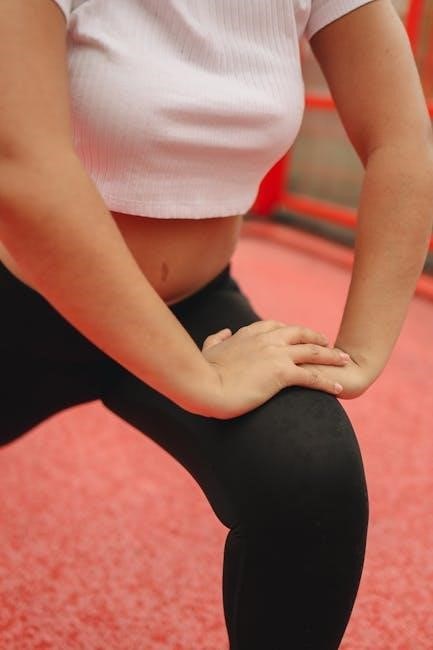
Hold this straightened position for a few seconds‚ then slowly lower your foot back down. The NHS materials emphasize maintaining a limited range of motion – a “short arc” – to avoid overstressing the healing joint. These PDFs often include visual guides demonstrating correct technique. Regular performance of short arc quads‚ as outlined in the NHS resources‚ is crucial for regaining strength and function‚ enabling improved walking and daily activities. Consistency is key to achieving optimal results.

Phase 2: Intermediate Exercises (Weeks 3-6)
NHS knee replacement exercise PDFs detail progressing exercises during weeks three to six‚ building strength and range of motion for improved functionality.
Straight Leg Raises
Straight leg raises are a cornerstone of Phase 2 rehabilitation‚ as detailed in NHS knee replacement exercise PDFs. These exercises focus on strengthening the quadriceps muscles without placing excessive stress on the newly replaced knee joint. Begin by lying flat on your back with the unaffected leg bent and foot flat on the floor. Keep the operated leg straight and tighten the thigh muscle‚ lifting the leg approximately 6-12 inches off the ground.
Hold this position for several seconds‚ then slowly lower the leg back down. Repeat this movement 10-15 times‚ several times a day. NHS guidance emphasizes maintaining proper form – avoid arching your back or twisting your hip. As strength improves‚ consider adding ankle weights‚ but only as directed by your physiotherapist. Consistent performance of straight leg raises‚ guided by NHS resources‚ contributes significantly to regaining full knee extension and overall functional recovery.
Wall Slides
Wall slides‚ frequently illustrated in NHS knee replacement exercise PDFs‚ are excellent for regaining knee flexion and improving overall lower limb control. Stand with your back against a wall‚ feet shoulder-width apart and slightly away from the wall. Slowly slide down the wall‚ bending your knees to a comfortable angle – typically no more than 45-60 degrees initially.
Maintain contact with the wall throughout the movement‚ ensuring your back remains straight. Hold this position for a few seconds‚ then slowly slide back up to the starting position. Repeat 10-15 times. NHS guidelines stress avoiding pain; only descend as far as comfortable. This exercise‚ detailed in NHS materials‚ strengthens the quadriceps and hamstrings while promoting controlled knee bending‚ crucial for daily activities like sitting and standing.
Standing Knee Bends (Mini-Squats)
Standing knee bends‚ often termed ‘mini-squats’ in NHS knee replacement exercise PDFs‚ are a progressive exercise to build strength and improve functional movement. Begin by standing with your feet shoulder-width apart‚ holding onto a stable surface for support if needed. Slowly bend your knees‚ keeping your back straight and your weight evenly distributed.
Only lower yourself a small distance – a ‘mini’ squat – aiming for around 10-20 degrees of knee bend initially. Avoid bending past 90 degrees. Hold briefly‚ then slowly straighten your legs. Repeat 10-15 times. NHS guidance emphasizes controlled movements and listening to your body; stop if you experience pain. These exercises‚ as detailed in NHS resources‚ enhance quadriceps and gluteal strength‚ vital for walking and stair climbing.
Gluteal Exercises (Bridging)
Gluteal exercises‚ specifically bridging‚ are frequently outlined in NHS knee replacement exercise PDFs as essential for post-operative rehabilitation. Lie on your back with your knees bent and feet flat on the floor‚ hip-width apart. Engage your core and squeeze your gluteal muscles‚ lifting your hips off the floor until your body forms a straight line from shoulders to knees.
Hold this position for a few seconds‚ maintaining the squeeze in your glutes‚ then slowly lower your hips back to the starting position. Repeat 10-15 times. NHS guidance stresses proper form to avoid strain. Bridging strengthens the gluteal muscles‚ crucial for hip extension and stabilization‚ contributing to improved walking and overall lower limb function‚ as detailed within the NHS documentation.

Phase 3: Advanced Exercises (Weeks 6-12+)
NHS knee replacement exercise PDFs detail progressive challenges‚ building strength and endurance. This phase focuses on functional movements for returning to daily activities.
Step-Ups
Step-ups are a fantastic advanced exercise‚ frequently detailed within NHS knee replacement exercise PDFs‚ designed to enhance lower limb strength and improve functional capacity. Begin with a low step – perhaps 4-6 inches – and gradually increase the height as your strength improves. Focus on controlled movements‚ ensuring your knee tracks directly over your ankle during the ascent.

Engage your gluteal muscles to power the upward motion‚ and avoid pushing off with your trailing leg. These PDFs often recommend starting with 10-15 repetitions on each leg‚ completing 2-3 sets. Proper form is paramount; if you experience pain‚ reduce the step height or discontinue the exercise. Remember to consult your physiotherapist or refer to the NHS guidelines within the PDF for personalized modifications and progression.

Calf Raises
Calf raises‚ a key component often illustrated in NHS knee replacement exercise PDFs‚ are excellent for strengthening the calf muscles‚ which are vital for walking and balance post-surgery. You can perform these standing‚ holding onto a support for stability if needed. Slowly rise up onto your toes‚ squeezing your calf muscles at the top of the movement.
Hold for a brief moment‚ then slowly lower back down. NHS resources typically suggest starting with 10-15 repetitions‚ completing 2-3 sets. As you progress‚ you can increase the repetitions or perform the exercise on a slightly elevated surface. Always prioritize controlled movements and listen to your body; pain signals a need to modify or stop. Detailed instructions and variations are readily available within the downloadable PDF guides.
Stationary Cycling
Stationary cycling‚ frequently detailed within NHS knee replacement exercise PDFs‚ provides a low-impact cardiovascular workout crucial for rebuilding strength and endurance after surgery. Begin with a low resistance and a comfortable seat height‚ ensuring your knee doesn’t fully extend or excessively flex during pedaling.
Start with short sessions – perhaps 5-10 minutes – gradually increasing the duration and resistance as your strength improves. NHS guidelines often recommend aiming for 20-30 minutes of cycling several times a week. Pay attention to your knee; any pain indicates a need to reduce intensity. The PDF resources offer specific guidance on bike setup and progression‚ helping you safely maximize the benefits of this exercise.
Balance Exercises (Single Leg Stance)
Balance exercises‚ like the single leg stance‚ are vital for restoring proprioception – your body’s awareness of its position in space – following knee replacement‚ and are thoroughly explained in NHS knee replacement exercise PDFs. Begin by holding onto a stable surface for support‚ gradually reducing your reliance as your balance improves.
Aim to hold the stance for 10-30 seconds‚ repeating several times on each leg. NHS resources emphasize starting slowly and progressing cautiously. These PDF guides often suggest performing the exercise near a wall or with a chair nearby for safety. Incorporating slight movements‚ like gentle knee bends‚ can further challenge your balance. Consistent practice will enhance stability and confidence in daily activities.
Resources and Further Information
Accessing NHS knee replacement exercise PDFs and online guidance is essential for continued progress; these materials support safe‚ effective rehabilitation post-surgery.
Accessing NHS Knee Replacement Exercise PDFs
Finding reliable‚ official NHS resources for knee replacement exercises is paramount to a successful recovery. Many NHS Trusts provide downloadable PDF guides detailing exercises for each phase of rehabilitation – from the initial post-operative period in hospital‚ through the first few weeks at home‚ and progressing to intermediate and advanced stages.
These PDFs typically include clear illustrations and step-by-step instructions‚ ensuring patients understand the correct form and technique. A quick online search using terms like “NHS knee replacement exercises PDF” coupled with your specific hospital trust’s name will often yield relevant results.
Furthermore‚ the NHS website itself often links to approved exercise programs. Remember to always discuss any new exercise regime with your physiotherapist or healthcare professional to ensure it’s appropriate for your individual needs and progress. Utilizing these readily available PDF resources empowers patients to actively participate in their recovery journey.
Tips for Safe and Effective Exercise
Prioritizing safety is crucial when following your NHS knee replacement exercise plan‚ often found in downloadable PDFs. Always begin with a gentle warm-up before each session‚ preparing your muscles for activity. Listen attentively to your body; pain is a signal to stop or modify the exercise. Consistency is key – aim for regular‚ short sessions rather than infrequent‚ strenuous ones.
Ensure you have a clear‚ uncluttered space to exercise‚ minimizing the risk of falls. Review the PDF instructions carefully before starting‚ paying close attention to proper form. Don’t hesitate to ask your physiotherapist for clarification if needed.
Gradually increase the intensity and duration of exercises as your strength and mobility improve‚ as outlined in your PDF guide. Celebrate small victories and remain patient – recovery takes time and dedication.