
church history pdf
Church history explores the origins, development, and key events of Christianity, offering insights into its evolution and impact across centuries. Studying it provides a deeper understanding of the faith’s foundations, challenges, and transformations over time.
1.1 Definition and Scope of Church History
Church history is the systematic study of Christianity’s past, examining its events, figures, and doctrines. It spans from the Apostolic Era to modern times, exploring the church’s development, challenges, and transformations. The scope includes key periods like the Middle Ages, Reformation, and contemporary era, as well as the evolution of creeds, councils, and religious practices. By analyzing historical contexts, church history reveals how faith has shaped cultures and societies, offering insights into its enduring influence and relevance in the modern world.
1.2 Importance of Studying Church History
Studying church history provides a deeper understanding of Christianity’s origins, evolution, and impact on society. It reveals how theological doctrines developed and how the church responded to cultural and political challenges. By examining past events, believers can gain insights into the faith’s continuity and diversity. Church history also helps in understanding the roots of modern religious practices and addressing contemporary issues effectively. It fosters appreciation for the sacrifices of early Christians and the contributions of key figures who shaped the faith.
1.3 Overview of Key Periods in Church History
Church history is divided into distinct periods, each shaping Christianity’s development. The Apostolic Era (1st century) saw the spread of Christianity by Jesus’ disciples. The Early Church (1st–5th centuries) faced persecution and established foundational doctrines. The Medieval Period (5th–15th centuries) witnessed the rise of the Papacy and monasticism. The Reformation (16th century) brought theological and structural changes. The Modern Era (17th–20th centuries) saw missionary movements and Vatican II’s reforms. Understanding these periods provides a framework for grasping Christianity’s evolution and global influence over two millennia.

The Early Christian Church (1st–5th Centuries)
The Early Christian Church (1st–5th centuries) saw the spread of Christianity, persecution, and key events shaping its doctrine and structure, influenced by figures like St. Paul.
2.1 The Apostolic Era and the Spread of Christianity
The Apostolic Era, spanning the 1st century, marked the birth and rapid expansion of Christianity. Following the resurrection of Jesus, the Apostles, led by Peter and Paul, preached the Gospel, establishing communities across the Mediterranean. The Gentile mission, particularly through Paul’s journeys, extended Christianity beyond Jewish circles, shaping its universal character. This period saw the formation of the early church structure and the dissemination of teachings that would become the foundation of Christian doctrine and practice.
2.2 Persecution and Martyrdom in the Early Church
The early Christian church faced intense persecution, particularly under Roman emperors like Nero and Diocletian. Christians were seen as threats to Roman authority and pagan traditions. Martyrs like Stephen and Paul became symbols of faith, enduring brutal executions for their beliefs. Persecution strengthened the church’s resolve, fostering unity and resilience. Despite suffering, Christianity spread rapidly, with martyrs’ testimonies inspiring others to embrace the faith. This period shaped the church’s identity, emphasizing sacrifice and unwavering commitment to Christ.
2.3 The Council of Nicaea and the Formation of the Nicene Creed
The Council of Nicaea, convened in 325 CE by Emperor Constantine, addressed the Arian controversy, which questioned Jesus’ divinity. The council affirmed Christ’s divine nature, leading to the Nicene Creed. This creed, refined at Constantinople in 381 CE, became a cornerstone of Christian doctrine, emphasizing the Trinity and Christ’s oneness with the Father. Its establishment unified the church and countered heresy, shaping Christian theology and worship for centuries. The creed remains a foundational statement of faith across many Christian traditions.
2.4 The Role of Early Church Fathers
The Early Church Fathers were pivotal in shaping Christian theology and practice. They included influential figures like Irenaeus, Augustine, and Origen, who defended the faith against heresies and interpreted Scripture. Their writings clarified doctrine, such as the nature of Christ and the Trinity, and provided guidance for church governance. The Fathers’ contributions laid the groundwork for orthodox Christianity, influencing liturgy, ethics, and the development of church traditions. Their legacy remains vital, offering insights into the church’s early struggles and the formation of its identity.
The Medieval Church (5th–15th Centuries)
The medieval church saw the rise of the Papacy, monasticism, and the Crusades, shaping Christianity’s influence in Europe. Key events like the Black Death also impacted its role in society.
3.1 The Rise of the Papacy and Its Influence
The Papacy emerged as a central authority in the medieval church, with the Pope wielding significant spiritual and political power. Key events, such as the Investiture Controversy, highlighted the struggle between the Papacy and secular rulers. The rise of the Papacy was further solidified through reforms like the Gregorian Reform, which aimed to centralize church authority. This period also saw the Pope’s influence extend beyond religious matters, shaping European politics and society. The Papacy’s power peaked during the 13th century, but challenges like corruption and conflicts with monarchs began to erode its authority.
3.2 Monasticism and Its Impact on Church Life
Monasticism played a pivotal role in shaping church life during the medieval period. Monasteries became centers of prayer, work, and study, preserving ancient texts and fostering spiritual growth. The Benedictine Rule, established by St. Benedict, provided a structured framework for monastic life, emphasizing communal living and service. Monastic communities also served as hubs for education, agriculture, and charitable works, influencing both the church and society. The rise of mendicant orders, such as the Franciscans, further expanded monasticism’s reach, emphasizing poverty and missionary work, which deeply impacted the church’s spiritual and social practices.
3.3 The Crusades and Their Religious Significance
The Crusades were a series of military campaigns initiated by the Catholic Church, beginning in 1095, aimed at reclaiming the Holy Land from Muslim rule. Pope Urban II’s call to arms ignited a wave of religious fervor across Europe. The First Crusade successfully captured Jerusalem in 1099, fulfilling a key religious objective. The Crusades reinforced the Church’s authority and fostered a sense of unity among Christians. However, they also led to widespread violence, fostering animosity between Christians and Muslims. The religious zeal of the Crusades shaped medieval Christianity and left a lasting impact on interfaith relations.
3.4 The Black Death and Its Effects on the Church
The Black Death, which devastated Europe in the 14th century, profoundly impacted the Church. The pandemic led to widespread death, challenging the Church’s ability to provide spiritual guidance. Many clergy perished, disrupting Church operations and creating a shortage of religious leaders. The crisis shook people’s faith, prompting questions about divine justice. In response, the Church emphasized prayer and penance, while some turned to mysticism or radical movements. The Black Death accelerated social and religious changes, reshaping the Church’s role in a fractured society and influencing future reforms.

The Reformation and Counter-Reformation (16th Century)
The 16th century saw a dramatic shift in Christianity with the Protestant Reformation, led by figures like Martin Luther, challenging Church authority and sparking theological debates. The Counter-Reformation, driven by the Catholic Church through the Council of Trent, aimed to reform internally and counter Protestantism, leading to the emergence of new Christian denominations and reshaping the religious landscape of Europe.
4.1 Key Figures of the Protestant Reformation
The Protestant Reformation was shaped by influential figures who challenged Catholic doctrine and practices. Martin Luther, a German theologian, sparked the movement with his 95 Theses, criticizing indulgences and sparking theological debates. John Calvin, a French reformer, developed Calvinism, emphasizing predestination and strict moral codes. Huldrych Zwingli, a Swiss reformer, advocated for radical church reforms. These leaders, along with others like Philip Melanchthon and William Tyndale, played pivotal roles in reshaping Christianity, leading to the emergence of Protestant denominations and altering the religious landscape of Europe.

4.2 The Role of Martin Luther and the 95 Theses
Martin Luther, a German theologian, played a pivotal role in the Protestant Reformation by challenging Catholic Church practices. In 1517, he published the 95 Theses, criticizing the sale of indulgences and questioning papal authority. This act sparked widespread theological debates and laid the groundwork for reform. Luther’s arguments emphasized justification by faith and the authority of Scripture, reshaping Christian doctrine. His courage and convictions ignited a movement that transformed the Church and left a lasting legacy in Christian history.
4.3 The Catholic Counter-Reformation and the Council of Trent
The Catholic Counter-Reformation, initiated in response to the Protestant Reformation, aimed to reform the Church and counter Protestant doctrines. The Council of Trent (1545–1563) was central to this effort, addressing theological disputes and internal abuses. It reaffirmed Catholic teachings, such as the importance of sacraments and tradition, while implementing reforms like the establishment of seminaries to improve priestly education. The Council also promoted the use of religious orders, like the Jesuits, to revive Catholic spirituality and mission work, shaping the Church’s response to the challenges of the Reformation era.
4.4 The Emergence of New Christian Denominations
The Protestant Reformation led to the emergence of numerous Christian denominations, each with distinct theological and organizational structures. Lutheranism, Calvinism, and Anglicanism arose, emphasizing unique doctrines like justification by faith and predestination. These denominations challenged Catholic authority, fostering religious diversity. The Reformation also spurred the development of Anabaptist and Puritan movements, further fragmenting Christianity. This period marked a significant shift in religious unity, as new denominations interpreted Scripture and practiced faith independently, shaping the modern Christian landscape with its rich theological and cultural variations.

Church History in the Modern Era (17th–20th Centuries)
The modern era saw Christianity grapple with Enlightenment rationalism, missionary expansion, and social movements. Vatican II brought reforms, reshaping the Church’s role in a changing world.
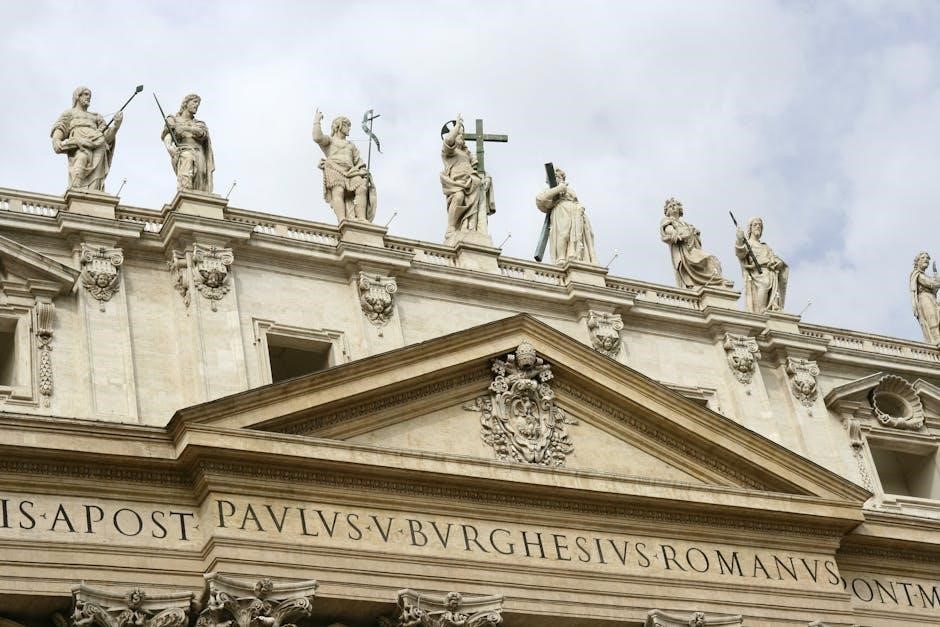
5.1 The Enlightenment and Its Impact on Church Authority
The Enlightenment emphasized reason, individualism, and scientific inquiry, challenging traditional religious authority. Thinkers like Voltaire and Kant questioned Church doctrines, promoting secularism and rational thought. This era saw a decline in the Church’s influence as governments adopted secular policies. The rise of scientific discoveries further eroded the Church’s authority, leading to a reevaluation of its role in society. The Enlightenment’s legacy includes the separation of Church and State, reshaping the Church’s relationship with modern society and fostering a more adaptive approach to faith in a changing world.
5.2 The Rise of Missionary Movements and Global Christianity
The rise of missionary movements in the 18th and 19th centuries marked a significant expansion of Christianity worldwide. Missionaries, often sponsored by European churches, traveled to distant lands, establishing churches, schools, and hospitals. This period saw the spread of Christianity to Africa, Asia, and the Pacific, shaping global religious demographics. Missionaries adapted to local cultures, translating the Bible and liturgies, while sometimes facing resistance. Their efforts laid the foundation for the diverse, global Christian community we see today, blending faith with cultural contexts and fostering cross-cultural exchange.
5.3 The Role of the Church in Social and Political Movements
The church has historically played a pivotal role in social and political movements, advocating for justice and equality. From the abolition of slavery to the civil rights movement, religious leaders and institutions mobilized communities to address systemic injustices. The church also influenced political reforms, such as labor rights and healthcare access, often aligning with moral and ethical teachings. This involvement reflects the church’s commitment to addressing human suffering and promoting societal transformation, bridging faith and activism to create a more equitable world.

5.4 Vatican II and Its Reforms in the 20th Century
Vatican II, convened by Pope John XXIII in 1962, marked a significant turning point in Catholic Church history. The council introduced reforms to modernize the Church, including the use of vernacular languages in liturgy and increased ecumenical dialogue. It emphasized the role of laity and addressed social issues, fostering a more inclusive and adaptive Church. Vatican II’s decrees reshaped Catholic identity, promoting engagement with the modern world while reaffirming core doctrines. Its legacy continues to influence contemporary Catholicism, reflecting a balance between tradition and progress.

Contemporary Church History ( Late 20th Century–Present)
The late 20th century to the present has seen the Church adapting to modern challenges, engaging with secularism, and embracing technology to spread its message globally.
6.1 The Church in the Age of Secularism and Pluralism
The late 20th century and present era have seen the Church navigating secularism and pluralism, where traditional religious authority faces challenges from diverse worldviews. The rise of secular societies has led to declining church attendance in some regions, while pluralism has prompted the Church to engage with other religions and ideologies. Vatican II reforms emphasized adaptability, fostering dialogue and renewal. Despite these shifts, the Church continues to advocate for moral guidance and spiritual relevance in a rapidly changing world.
6.2 The Role of Technology in Modern Church Practices
Technology has revolutionized modern church practices, enhancing worship, communication, and community engagement. Online platforms enable live-streamed services, reaching global audiences. Digital tools like QR codes for donations and apps for scripture access simplify church operations. Social media fosters connection and outreach, while virtual reality creates immersive spiritual experiences. These innovations help churches adapt to contemporary needs, ensuring relevance and accessibility in a tech-driven world.
6.3 Globalization and the Diversity of Christian Practices
Globalization has led to the diversification of Christian practices, as the faith spreads across cultures and continents. Local traditions and languages now influence worship, creating vibrant expressions of Christianity worldwide. For instance, Latin American liberation theology and African Pentecostal movements reflect regional contexts. This diversity enriches the global church, fostering mutual understanding and unity. However, it also presents challenges in maintaining doctrinal consistency. Despite these complexities, globalization highlights Christianity’s adaptability and universal appeal, ensuring its relevance in a interconnected world.
6.4 Current Challenges and Future Prospects for the Church
The church faces challenges like declining attendance, secularism, and adapting to technological advancements. Embracing digital platforms for outreach and engaging younger generations are key to relevance. Addressing social justice and fostering unity amid diversity are crucial. Despite these hurdles, the church has opportunities to renew its mission, emphasizing compassion and inclusivity. By leveraging global connections and embracing change, the church can thrive, continuing to inspire and serve humanity in a rapidly evolving world.
Key Documents and Writings in Church History
The Bible, early Christian writings, and creeds like the Nicene Creed are foundational. Church councils and modern theological movements continue to shape doctrine and practice, guiding faith communities.
7.1 The Bible and Its Interpretation Throughout History

The Bible, as the central text of Christianity, has undergone varying interpretations across centuries. Early Christian communities relied on oral traditions before the New Testament’s canonization. The Council of Nicaea (325 AD) played a pivotal role in establishing orthodox interpretations. During the Reformation, Protestant leaders emphasized individual study and translation, leading to diverse understandings. Modern scholarship incorporates historical and cultural contexts, while technological advancements enable global access and new methods of analysis, enriching the ongoing dialogue with Scripture.
7.2 The Influence of Early Christian Writings and Creeds
Early Christian writings, such as the Epistles of Paul and the Gospels, laid the foundation for Christian doctrine. Creeds like the Nicene Creed (325 AD) and the Apostles’ Creed unified beliefs across the church. These texts addressed theological disputes, established orthodoxy, and guided worship. The Council of Nicaea exemplified how creeds could resolve conflicts, such as Arianism. Early Church Fathers further elaborated on these writings, shaping Christian thought. Their influence persists, as creeds remain central to liturgy and doctrine, reflecting the church’s enduring commitment to its foundational teachings.
7.3 The Role of Church Councils and Their Decrees
Church councils, such as Nicaea (325 AD) and Constantinople (381 AD), played a pivotal role in resolving theological disputes and establishing doctrine. These gatherings of bishops addressed heresies like Arianism and defined the divinity of Christ. The decrees, including the Nicene Creed, unified the church and provided a theological framework. Councils also addressed ecclesiastical practices, ensuring orthodoxy and maintaining unity. Their decisions shaped Christianity’s development, influencing both doctrine and practice for centuries, and remain foundational to understanding the church’s historical evolution and its ongoing commitment to theological clarity.
7.4 Modern Theological Movements and Their Impact
Modern theological movements, such as liberation theology and feminist theology, have reshaped Christian thought by emphasizing social justice and inclusivity. These movements challenge traditional doctrines, advocating for equality and addressing contemporary issues like poverty and gender roles. They have inspired new approaches to ministry and community engagement, fostering a more compassionate and socially active church. Their influence continues to grow, encouraging dialogue and reform within Christian communities worldwide, ensuring theology remains relevant in a changing world.
The Church and Society
The church has historically influenced society through education, healthcare, and social justice, shaping cultural norms and values. Its role continues to evolve, addressing modern societal challenges.
8.1 The Relationship Between Church and State
The relationship between church and state has historically been complex, evolving from periods of unity to separation. In medieval times, the church held significant political power, influencing state affairs. The Reformation and Enlightenment eras challenged this dynamic, leading to the separation of church and state in many regions. Today, this relationship varies globally, with some nations maintaining strong ties while others embrace secularism. The church’s role in shaping societal values and policies remains a key aspect of this enduring interaction, reflecting both cooperation and tension over centuries.
8.2 The Church’s Role in Education and Healthcare
The church has historically played a pivotal role in education and healthcare, establishing schools, universities, and hospitals. During the Middle Ages, monasteries preserved knowledge and provided care to the sick. The church’s emphasis on charity and compassion led to the founding of institutions that served society’s most vulnerable. This legacy continues today, with many religious organizations operating schools and healthcare facilities worldwide. The church’s contributions to education and healthcare remain a cornerstone of its social mission, reflecting its commitment to serving humanity and fostering spiritual and physical well-being.
8.3 The Church’s Response to Social Justice Issues
The church has long advocated for social justice, addressing inequality, poverty, and human rights. Historically, it supported movements like abolition and civil rights, while modern efforts focus on issues like immigration and environmental justice. Through teachings and activism, the church emphasizes compassion and dignity for all, inspiring communities to address systemic injustices. Its role in promoting fairness and equality reflects a commitment to aligning faith with action for the common good, ensuring a moral voice in societal challenges.
8.4 The Church’s Influence on Art and Culture
The church has profoundly shaped art and culture throughout history. From iconic cathedrals to masterpieces like Michelangelo’s Sistine Chapel ceiling, religious themes dominate Western art. Music, literature, and architecture have also been deeply influenced by Christian traditions. The church’s patronage supported artists, preserving cultural heritage and inspiring creativity. Its impact extends beyond religion, fostering a legacy that continues to inspire artistic expression and cultural development, reflecting the enduring interplay between faith and human creativity across centuries.
Church history reflects a journey of faith, transformation, and resilience, shaping global culture and spirituality. Its legacy continues to inspire and guide modern society and future generations.
9.1 Summary of Key Themes in Church History
Church history reveals the dynamic interplay of faith, culture, and society. From its origins in the 1st century to modern times, Christianity has evolved through persecution, doctrinal debates, and institutional changes. Key themes include the spread of Christianity, the rise of the papacy, the Reformation, and the Church’s response to secularism. The legacy of early church fathers, councils, and theological movements underscores its rich intellectual heritage. Globalization and contemporary challenges highlight the Church’s ongoing adaptation and relevance in a changing world.

9.2 The Legacy of Church History in the Modern World
Church history profoundly shapes modern society, influencing education, healthcare, and social justice. The Church’s historical role in art and culture remains evident, while its theological traditions continue to inspire contemporary thought. Reforms like Vatican II have modernized practices, ensuring relevance in a secular world. The legacy of early church fathers and councils underscores the enduring impact of Christian teachings. Today, the Church’s historical journey informs its response to global challenges, bridging past and present in a dynamic interplay of faith and culture.
9.3 Final Thoughts on the Study of Church History
Studying church history offers a rich tapestry of events, figures, and theological developments that shape Christian identity. It provides lessons for navigating modern challenges, fostering unity, and understanding diversity. By examining the past, believers gain insights into the resilience of faith and its adaptability across cultures. Church history is not just a chronicle of events but a living narrative that inspires reflection, growth, and a deeper connection to the global Christian community, ensuring its relevance for future generations.